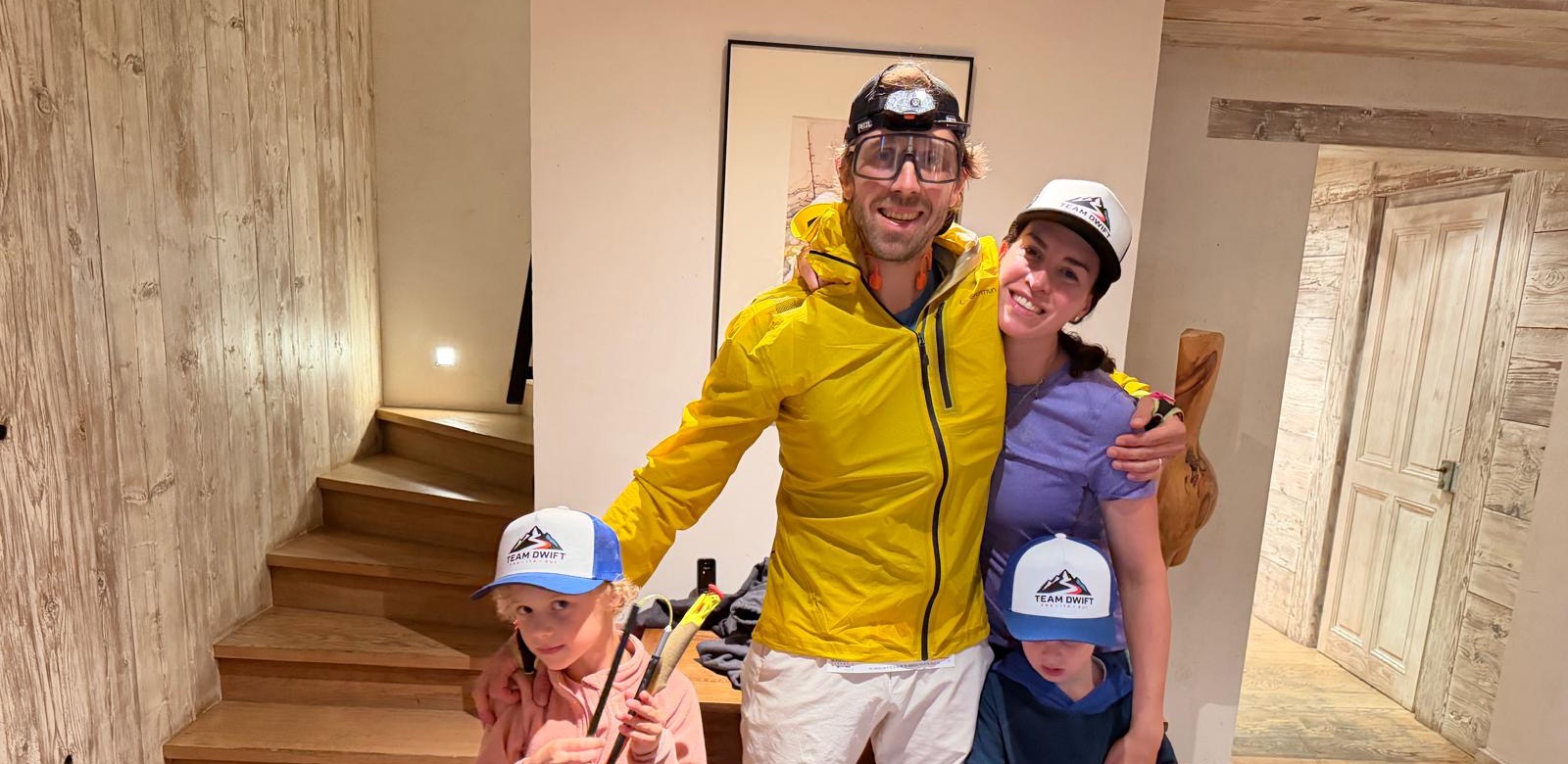
UTMB 2026 Race Report
DNF — Les Chapieux, km 52.
After running UTMB in 2025, I knew I wanted to run it again. I don’t know if there’s a more electric environment for a runner. Big marathons are fun, but you don’t get a crowd like this — and the crowd treats Joe Schmo exactly the same as Courtney.
But signing up again also meant a chance to go faster. After listening to Ruth Croft’s and Tom Evans’s post-race talks, I believed a change in training could find that speed. I signed on with Anna DeMonte at Evoke Endurance to take my UTMB to the next level. We built the year around weighted uphill climbs, downhill speed work, and strength training for muscular endurance — and I traded my 14-hour days for back-to-back-to-back(-to-back) sessions of 3–3.5 hours.
It was working. In July I ran 20:58 at the Gran Trail Courmayeur 100K, and every number I tracked — climbing power, descent speed, late-race retention — was the best of my life.
Then, in mid-August, our family got hit by norovirus. Rather than reading that as a sign to slow down, I got back on the trail as fast as I could. On an easy 3.5-hour effort, I slipped on a descent. My left foot stayed planted while the rest of me kept going, hyperflexing the ankle — and I heard a pop. By that evening I couldn’t put weight on it. I couldn’t walk.
Convinced I’d broken something, I went to the emergency room the next day. As with all ER experiences, it was awful — but nothing was broken.
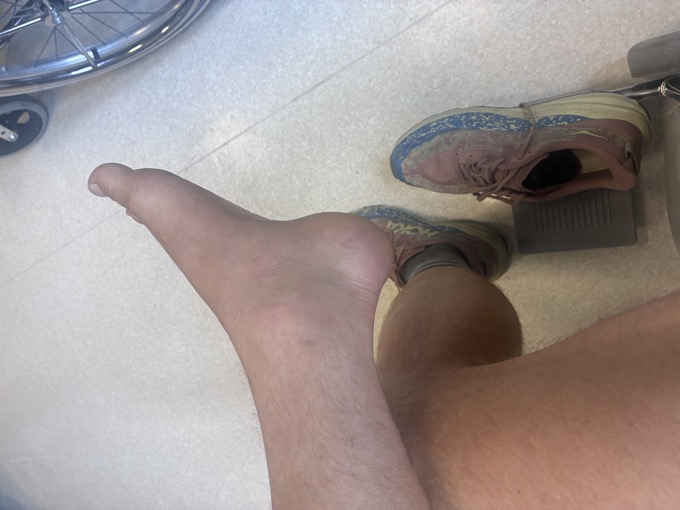
The follow-up ultrasound delivered the diagnosis in the most Italian way possible: “una bella distorsione” — a beautiful sprain. Kager’s triangle badly inflamed, the tendons angry, and a verdict: you won’t be running UTMB. But: see an orthopedist.
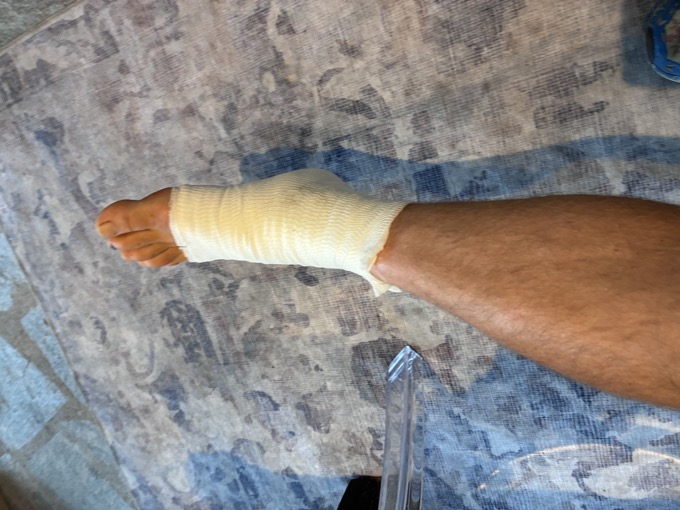
I met her on the 16th. The ankle was stable but not in a good place. She gave me a 50/50 chance of starting — and told me her gut said no. Her prescription was intense physical therapy for the ten days that remained. I found Fisioterapista SDM in Aosta the next morning and was sitting in their office that afternoon. They thought they could get me to the start line, but it would take an aggressive plan: an hour of Tecar and laser, then over an hour of proprioception and strength work, three days running.
By Friday I could run for two hours — until the run cut itself short when a secondary reaction flared the tendon at the front of my ankle. We kept the therapy going despite the failed test. On the Wednesday before the race I went out for one more hour: 580 meters up and down, the ankle silent, the legs bouncing off a forced taper. I was ready to give UTMB a shot. Looking back, only a 3+ hour effort could have truly tested the load — and that’s not a test you can run during race week.
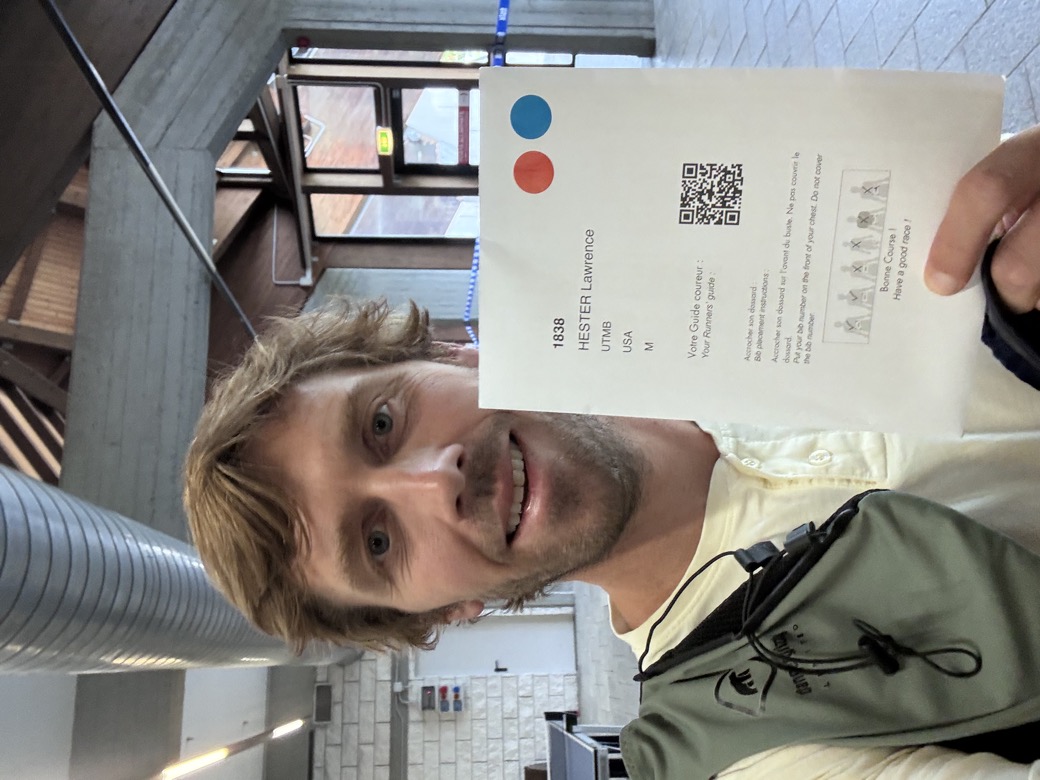
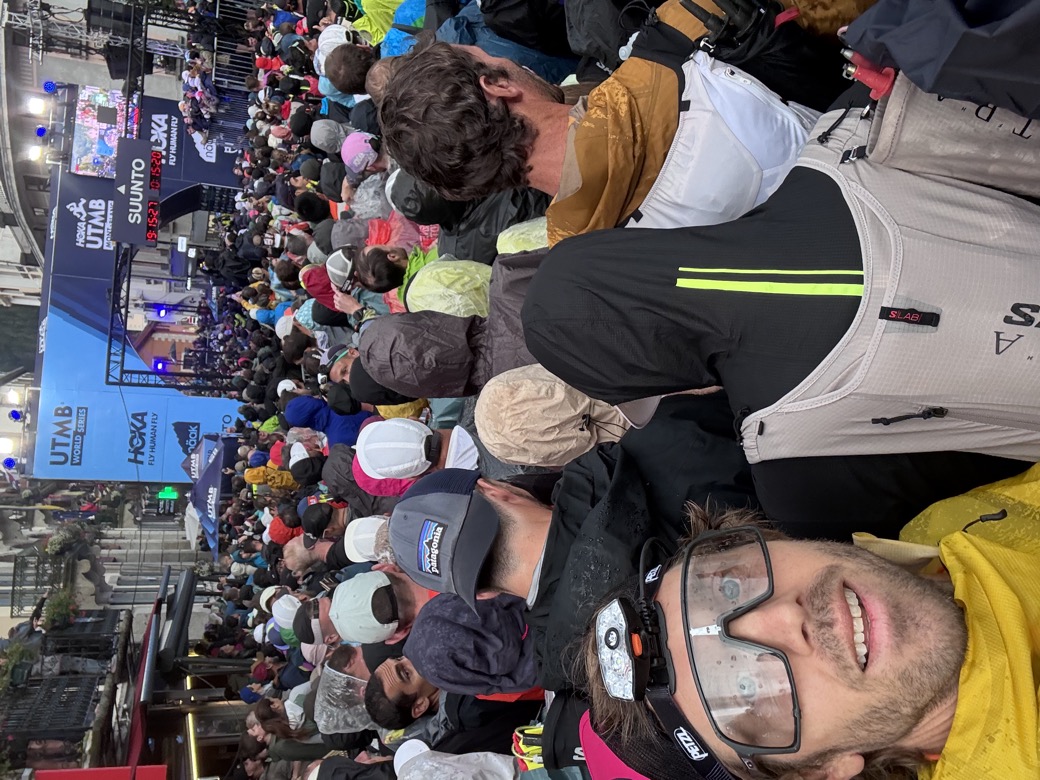
And so I found myself on the start line. This year I stayed in Chamonix the night before and slept great; with the delayed start I even got a solid nap in. I arrived an hour early — next time it’s 90 minutes to two hours, because it was already packed — planning to beat the lines at the bridge and the three other choke points. That was my first ankle mistake: an hour of awkward standing, in pouring rain, before the gun.
The energy was electric. I felt ready. I took off a little hot to beat the choke points, planning to throttle back after Saint-Gervais — and, if I’m honest, I let the crowd push me a few too many times. My heart rate data later confirmed what I suspected: the first three hours ran well above my plan before I finally settled.
The descent into Saint-Gervais brought a few awkward ankle moments — a heel landing badly on a rock, a sharp pain, then nothing. I whipped through the aid station as planned. About 3 km before Les Contamines, I fell and jammed my right middle finger (or broke it — TBD). Maybe it was a sign of what was coming.
At Les Contamines, Marina had been waiting for a couple of hours. She nailed everything — bottle exchanges, layers, the pep talk. She told me I was doing great and to keep the effort up. I was out the door in under five minutes.
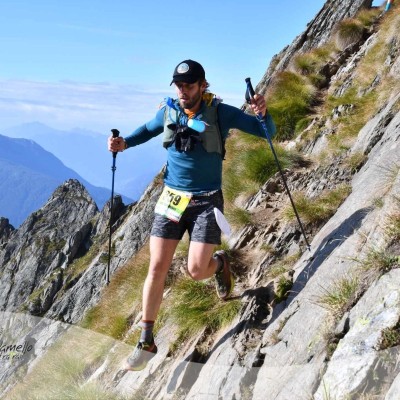
The section through Notre-Dame de la Gorge was good, and then I hit the red-light zone of the Contamines nature reserve. Even under a full moon it was genuinely hard to see, and I babied the foot. I slowed way down to avoid a bad step — it cost me enormous mental energy, and despite all that focus I still took several bad steps, each one flaring the ankle a little. Even so, I picked up six places to the top of the col. And then, right at the top, I caught my toe on a rock and it whipped my leg back behind me — recreating the injury in a slightly different way. On the descent I could feel my gait change to protect the foot, and before long the same tendon that had ended my Friday test run was screaming. I thought I could walk-run it off. After 25 very slow minutes I called Marina and told her I was in a lot of pain and heading for the medical tent. I lost more than a hundred places on the easiest, most runnable stretch of the course — my watch later told the story plainly: descending at a third of my normal speed with my heart rate at 128. The engine idling, the ankle refusing.
At Les Chapieux I skipped the food tables and went straight to medical. A medic worked the ankle: inversion — sharp pain. Traction — sharp pain near the heel. Pressing around the tendon and Kager’s triangle — pain everywhere that mattered. I asked whether taping would let me continue (backstory: my PT had taped the ankle, but I’d removed it before the race because it was blistering the sole of my foot). Taping might take away some of the pain, they said — but not most of it. Given where the pain was coming from, they recommended I stop.
Then a second medic came over and introduced himself as the one whose job was to encourage me to keep going. I told him I didn’t think I could. He asked for a single-leg hop. Standing on my left foot alone was so painful I couldn’t bear weight — the adrenaline wearing off, I guess. He saw it, and told me it was my choice, but probably best to stop. I told them I was done. I wasn’t there to prove I could finish. I proved that in 2025.
Then came the saddest moment of the whole month: a woman arrived at the medical table and cut the corner off my bib — the piece you hand over for your finisher’s vest. That’s when it was truly over. They let me send Marina a message from their phone (runners don’t get the wifi), and pointed me to the nap room to wait for the 6 a.m. bus.
They helped me to a bed. I swapped my soaked shirt for the fleece in my pack and shivered for an hour until my shorts dried, then slept until six. At six I boarded the bus — and learned it doesn’t leave until it’s full. It filled at 7:25. The guy behind me said the ride back was two and a half hours; cell service, when it returned, confirmed it. A long, slow ride with a bus full of sad, angry people, me included. The whole way I kept thinking: maybe I could have kept going. I should have kept going. Then I arrived in Chamonix, Marina met me, and my ankle was so swollen I couldn’t walk on it. I wasn’t meant to continue.
Was it worth starting?
The question I’ll get — the question I asked myself on that bus — is whether I should have deferred the moment the ultrasound came back. Taken the sure thing, healed clean, come back next year untouched.
I think it was worth the shot. Here’s the honest accounting. Deferring bought certainty and cost me an answer. Starting cost me a re-injury — and bought me forty-four of the best kilometers I’ve ever run, proof that the training year worked, a night of race data I’ll build the next campaign on, Marina’s first full crewing campaign executed flawlessly, and the knowledge that when the moment came, I could make the right call at 3 a.m. in a medical tent with my race on the line. I didn’t start on a whim: an orthopedist said 50/50 and stable, ten days of aggressive physio said trending right, and the final test run said go. The process was sound. The dice just landed on a rock at kilometer 45.
There’s one honest asterisk, and I’m not going to pretend it isn’t there: this math only holds if the re-injury heals on a normal timeline. If one caught toe turns into a much, much longer recovery, the accounting changes, and I’ll say so. But betting on a fair process and losing is different from betting recklessly — and I’d take the same 50/50 again.
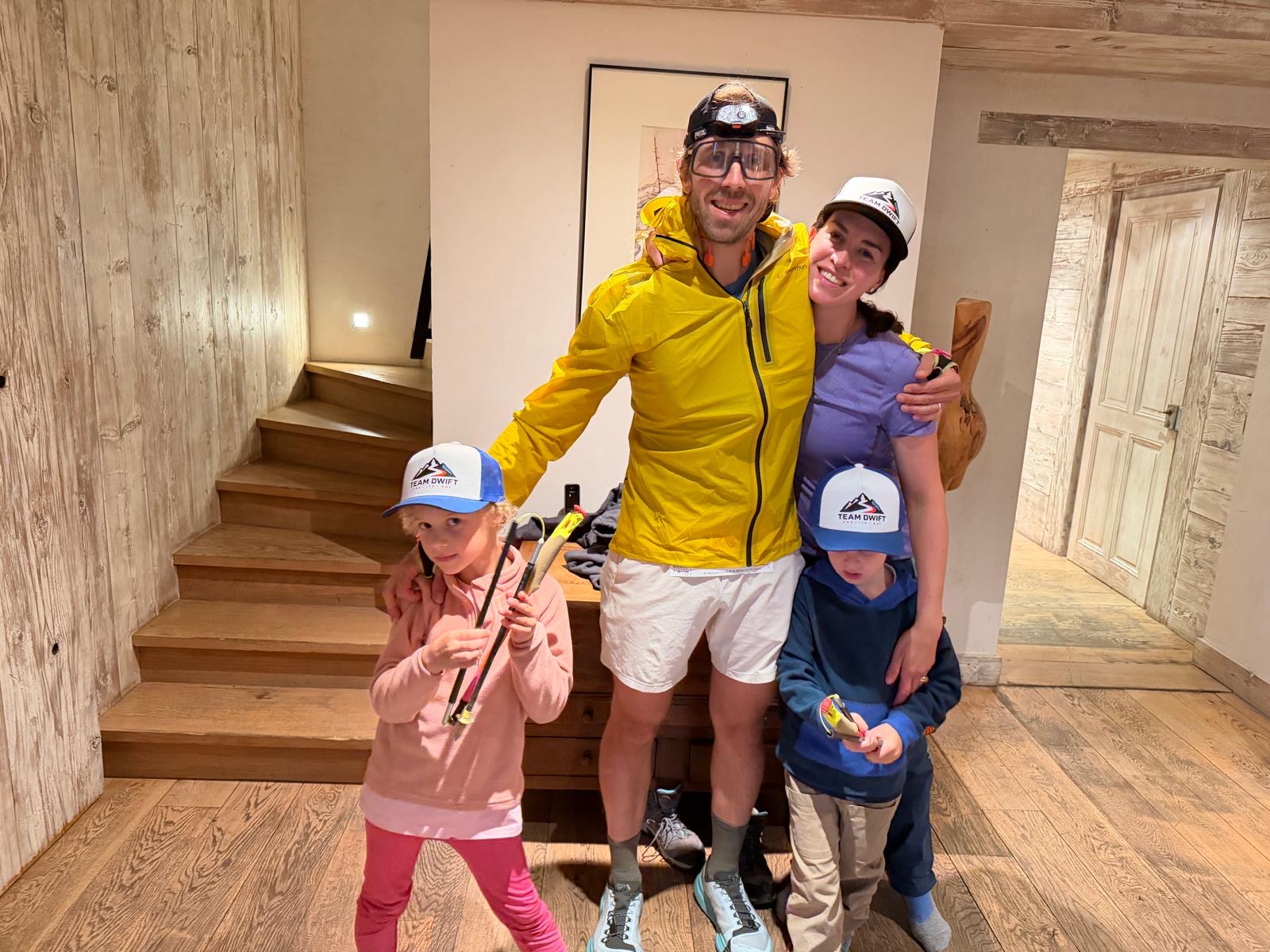
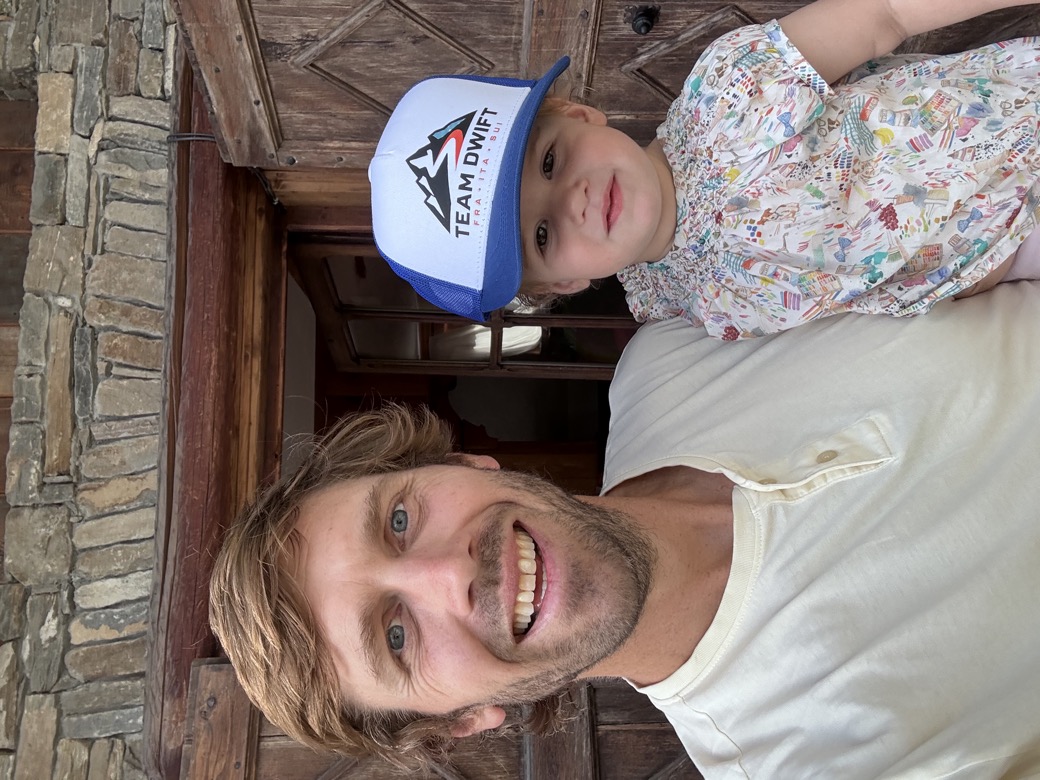
Huge shout-out to all of Team DWIFT. Marina, who nailed crewing in her first fully prepped campaign — every bottle, every layer, every call. Ryan, set up in Courmayeur to rush me out the door (next time, we’ll actually get there). My parents for watching Paloma and Lolo, Angela for watching Viola, and all of my family for the help across a year of training. The result is always a one-day affair — but the truth is the load of the whole year. The training, and everything it takes to reach a start line, is an accomplishment in itself. None of it happens without Marina and the kids. Ultrarunning is an addiction and a passion.
I’ve already lived through the trough of despair — the night of never running again, that was it. It wasn’t it. Now it’s time to heal this ankle and figure out what’s next — because the first 44 kilometers proved the engine is the strongest it’s ever been. That’s not a season to mourn. That’s my new base. How do we use it?
By the numbers: the first 52 km, 2025 vs 2026
Same course, same body, one year of Evoke training apart. And if anything the conditions flatter 2025’s numbers less than you’d think — last year was pouring rain, snow, mud, and freezing temps; this year the rain came but the trails mostly held.
| Checkpoint | 2025 | 2026 | Difference |
|---|---|---|---|
| km 10 | 1:19 | 0:58 | −21 min |
| km 20 | 3:07 | 2:27 | −40 min |
| Les Contamines (km 31) | 4:56 | 3:52 | −64 min |
| Top of the Bonhomme climb (km 44) | 7:50 | 6:27 | −83 min |
| Les Chapieux (km 52) | 9:31 | 8:02 | −89 min — and the last 7 km were on a re-injured ankle |
The Bonhomme climb (km 36–46, ~1,270 m of ascent): 579 m/h at HR 137 in 2026 vs 548 m/h at HR 130 in 2025 — 6% faster, at night, while deliberately braking through the red-light zone on a compromised ankle. Vertical meters per heartbeat came out identical between the years (4.23 vs 4.22) — same efficiency, more output. That’s what the training year bought.
The descent to Les Chapieux is where the injury shows: 1,098 m/h at HR 120 in 2026 vs 1,143 m/h at HR 124 in 2025. Read that carefully — injured, I descended at 96% of my healthy 2025 speed, with my heart rate telling the real story: the engine was idling while the ankle set the pace. Healthy, that descent goes at 1,600+.
An hour and a half up on my 2025 self at the moment the race ended — having deliberately given time away in the dark, on an ankle ten days off a “you won’t be running UTMB.” The fitness was never the question on Friday night. That’s the base we build 2027 on.
Lawrence Hester
CEO of Expedition Software. Ultrarunner. DWIFT.